Precision Dentistry for Horses—From Routine to Complex
Healthy teeth are essential to how a horse eats, performs, and feels. At Anoka Equine Veterinary Services, our dentistry program combines thorough exams, modern equipment, and experienced clinicians to keep your horse comfortable—from routine floats to complex extractions and periodontal care.
Why Equine Dentistry Matters
Sharp enamel points, hooks, waves, fractured teeth, and periodontal disease can cause pain, head tossing, bitting resistance, weight loss, and poor performance. Proactive dental care improves chewing efficiency, supports topline and condition, and helps your horse stay focused and comfortable under saddle. Regular evaluations also catch small problems early—before they become emergencies or require extensive surgery.
Complete Dental Care On Farm or In Clinic
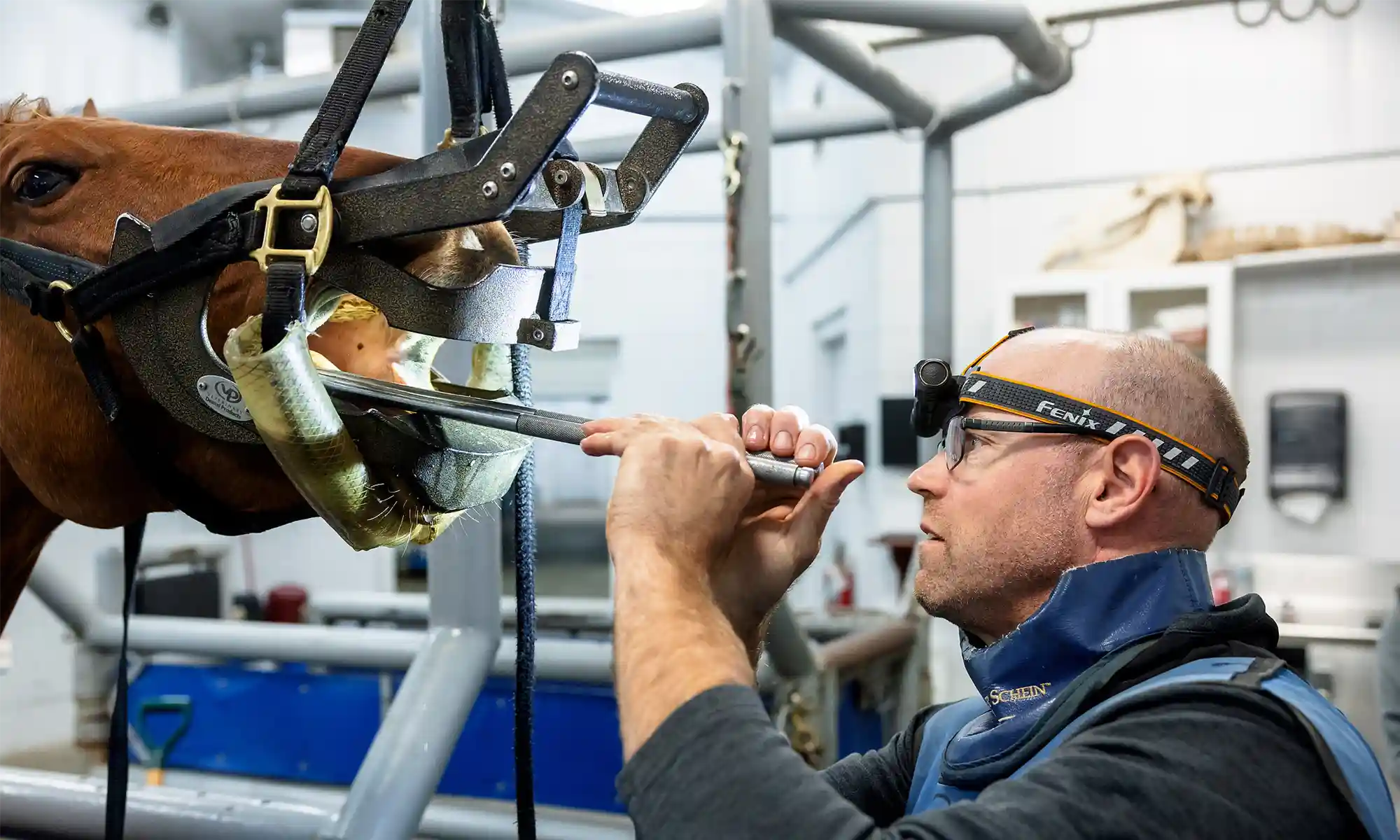
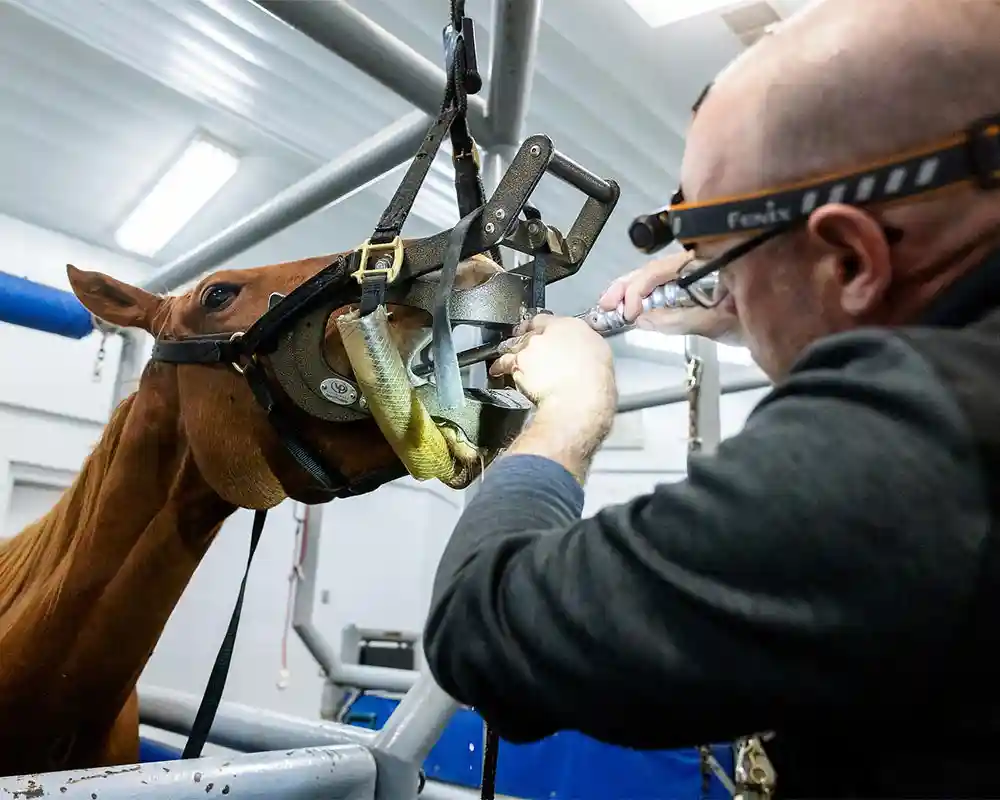
Routine checks, exams, and floats can be scheduled in-house or on-farm, depending on what’s best for your horse and the procedure. We typically use power floats to achieve a precise, even balance of the mouth, and we supplement with hand instruments when appropriate. Your veterinarian will discuss sedation needs, bitting goals, feed concerns, and any history of dental sensitivity to tailor the plan.
Advanced Diagnostics & Periodontal Therapy
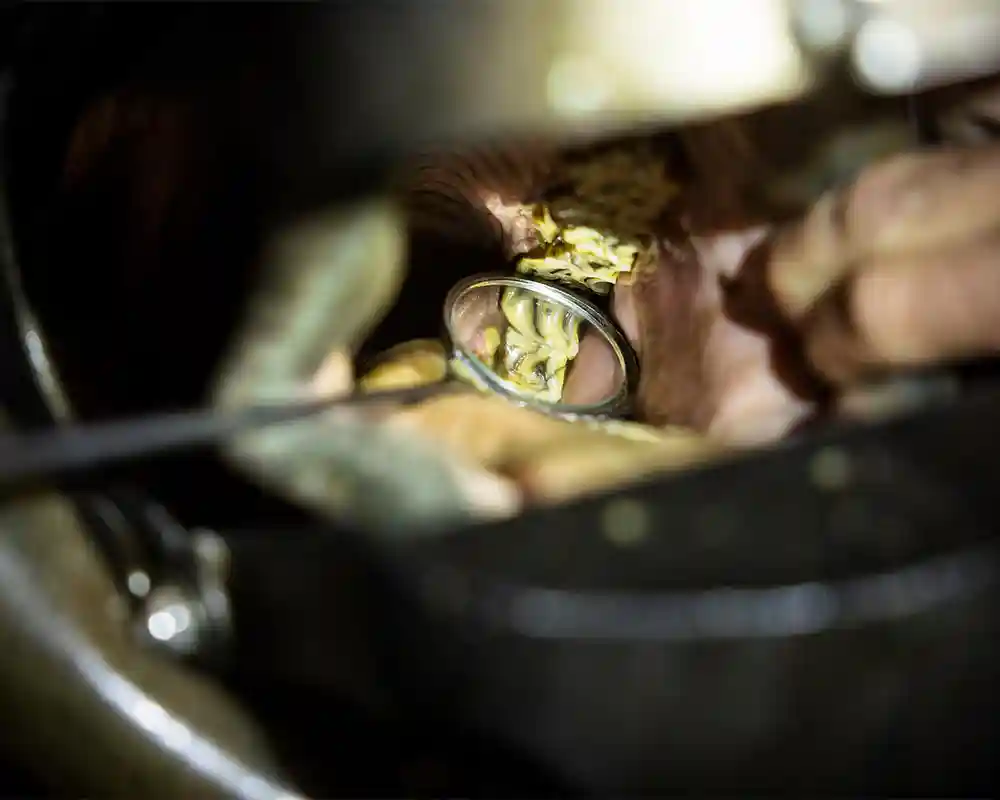
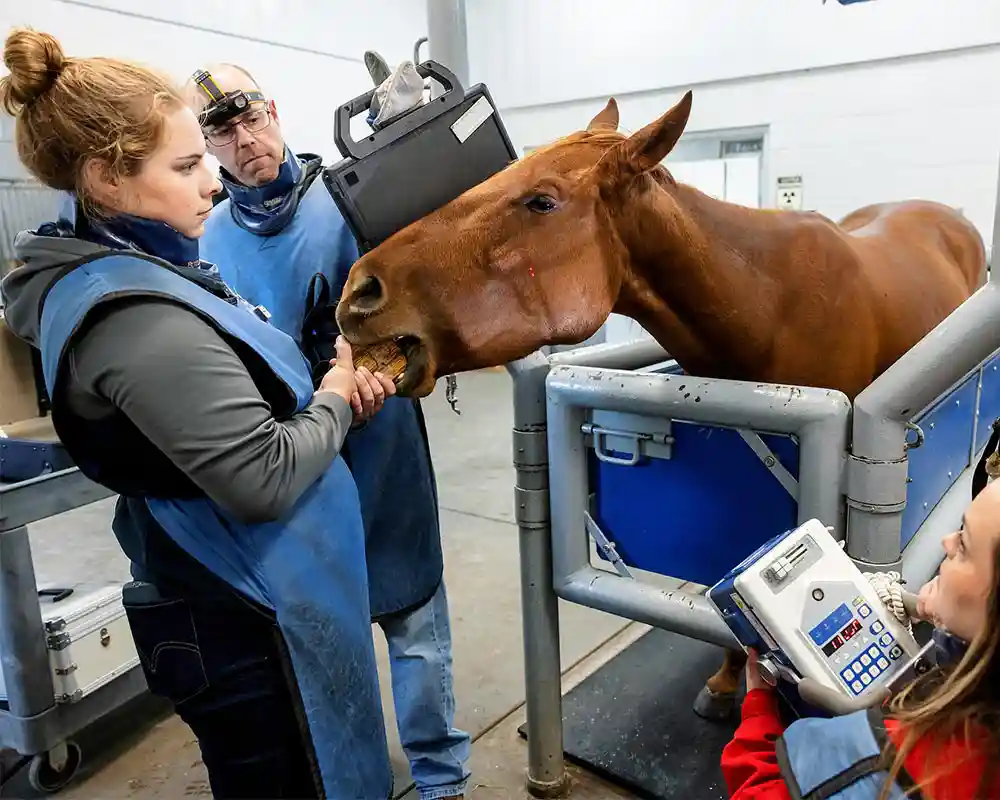
We offer dental radiographs (X-rays) to evaluate roots, reserve crowns, sinus involvement, and hidden pathology you can’t see on an oral exam alone. For cases that require more than routine care, we provide periodontal treatment—including deep cleaning, flushing, and management of pockets or feed impaction—available only in our clinic for optimal monitoring and instrumentation.
Dental Surgery & Complex Extractions
Our doctors are experienced in dental surgery, including simple and extensive tooth extractions and other advanced procedures. Because equine teeth and sinuses are uniquely complex, our team pursues continuing education regularly to stay current with techniques that improve comfort, shorten procedure time, and support faster recovery. When surgery is indicated, we’ll walk you through options, risks, costs, and recovery milestones so you can make a confident decision.
What to Expect
Before the procedure:
We start with a comprehensive oral and facial exam, discuss your horse’s work level and feeding, and review any prior dental history. If indicated, we’ll recommend radiographs to guide treatment and confirm the plan.
During the procedure:
Your horse’s safety and comfort come first. We use sedation as appropriate, perform balanced floating—typically with power floats—and complete indicated treatments or extractions with careful, stepwise technique. If a case requires in-clinic periodontal therapy or surgery, we’ll coordinate a smooth haul-in and prepare the stall.
Aftercare and follow-up:
You’ll receive clear discharge instructions that may include short-term diet modifications, pain control, and salt-water rinses or medicated rinses when applicable. We’ll recommend a recheck interval based on your horse’s age, dentition, and workload to maintain long-term comfort and performance.
When to Call
Contact us if you notice dropping grain, slow eating, nasal discharge with odor, head tilting while chewing, resistance to the bit, facial swelling, quidding, or unexplained weight loss. Early evaluation helps us correct issues before they affect performance—or require emergency care.
Whether you need routine floating or a complex extraction, our team is ready to help. Schedule a dental evaluation or call us with questions to discuss on-farm vs. in-clinic options, radiographs, periodontal therapy, and surgical care tailored to your horse.